Chapters
- Capítulo de Antioquia, Colombia
Overview
In 1964 the first cultural exchange between Antioquia and Massachusetts took place through an internship of a group of Textile Technology students from the Technological Institute (EAFIT) of Medellin to the Textile Institute of the city of Lowell (Massachusetts), thanks to this exchange, the establishment of ties of friendship and companionship between peers from Medellin and Boston, and the flourishing of two textile cities very similar in their fordist structures at that time, the flourishing of two textile cities very similar in their fordist structures at that time, and the contacts of Antioquia and Partners leaders in Washington in 1965, in 1966 the statute of the Massachusetts Antioquia Partnership was officially accepted in the State of Massachusetts.
Between 1967 and 1980 cultural exchanges were strengthened through two-way internships, with the support of the Universities of Massachusetts and the Department of Antioquia. Between 1981 and 1997, programs such as: Kellogg Fellows/International Leadership Development, Adventure Colombia, Life Skills, Seeds for the Americas, Food Conservation, Hilton/Perkins International, Rehabilitation and Special Education, Student Exchanges and Teacher Training, Economic Development, Arts and Culture, HIV/AIDS, Health, Women and Family, Sports, Substance Abuse, Disaster Prevention Preparedness, Environmental Protection, Journalism, Home Economics and Nutrition, Community Education, Agriculture, Vision Testing and National Training Policies, among others.
In 1988 the Antioquia Chapter was legally established before the Government of Antioquia through resolution No. 0035981 of June 16, the partnership transferred its assets to the newly created Corporation Procivismo and Social Development of Antioquia, name under which it operated until 1999, when the Partners of the Americas Antioquia Massachusetts Foundation was born, legal figure under which it currently operates.
For the period 2000 - 2015 Partners of the Americas Antioquia - Massachusetts participates in the dialogue and monitoring of projects before national and international agencies and NGOs, through Partners of the Americas in Washington and Massachusetts, where programs such as Sports Exchanges, Climate Change and Legal Rights, have enabled the formation of more than 30 Fellowships in different disciplines.
Through these activities, we seek to develop programs that impact the most disadvantaged communities in Antioquia, achieve the sustainability of the Foundation, and strengthen volunteerism.
Leadership
Chapter Email: CO.Antioquia.Capitulo@partners.net
Position Name Contact Information* President Silvia Gómez Oquendo Contact Secretary J. Alberto Hincapie Lopez Contact Treasurer Hugo Jaramillo Contact (Users must have a PartnersConnect account to access - log in or create one today!)Useful Links
(Users must have a PartnersConnect account to access - log in or create one today!) - Capítulo de Sur Occidente (Cali)
Overview
The Sur Occidente (Cali) Chapter is an association of professional volunteer members legally constituted in Colombia, founded in 1977, with 40 volunteer members, and with general recognition in education, recreation and sports programs, and cultural and environmental exchanges.
Leadership
Chapter Email: CO.Cali.Capitulo@partners.net
Position Name Contact Information* President Gloria Ortiz Contact Vice President Mario German Barbosa Contact Secretary Luz H. Arango Contact *(Users must have a PartnersConnect account to access - log in or create one today!)Useful Links
(Users must have a PartnersConnect account to access - log in or create one today!) - PartnersCampus Fundación Tomas Rueda Vargas
- PartnersCampus UniAtlántico
- PartnersCampus UniNorte
- PartnersCampus UniNúñez
- PartnersCampus Universidad EAFIT
100,000 Strong in the Americas
The 100,000 Strong in the Americas (100K) Innovation Fund expands opportunities for higher education institutions to create partnerships and launch innovative student exchange and training programs. This opens access to underrepresented student populations, improves workforce development training, increases public-private investment, and strengthens people-to-people ties between the United States and Latin America and the Caribbean.
The 100,000 Strong in the Americas initiative equips and builds a thriving, skilled workforce across the Americas through multi-sector partnerships and innovative regional education collaboration. Equipping students with technical and linguistic skills through exchange programs, 100,000 Strong helps develop a more skilled workforce and strengthens regional economies. In 100,000 Strong, the U.S. Government, the private sector and regional governments, and higher education institutions work together to strengthen regional prosperity and U.S. economic security.
$9.8million in grants awarded25countries and 49 U.S. states and territories benefited from grant programs572higher education institutions formed partnerships for international collaboration7,100+student and faculty beneficiariesAdvancing Labor Compliance in Colombia’s Port Sector
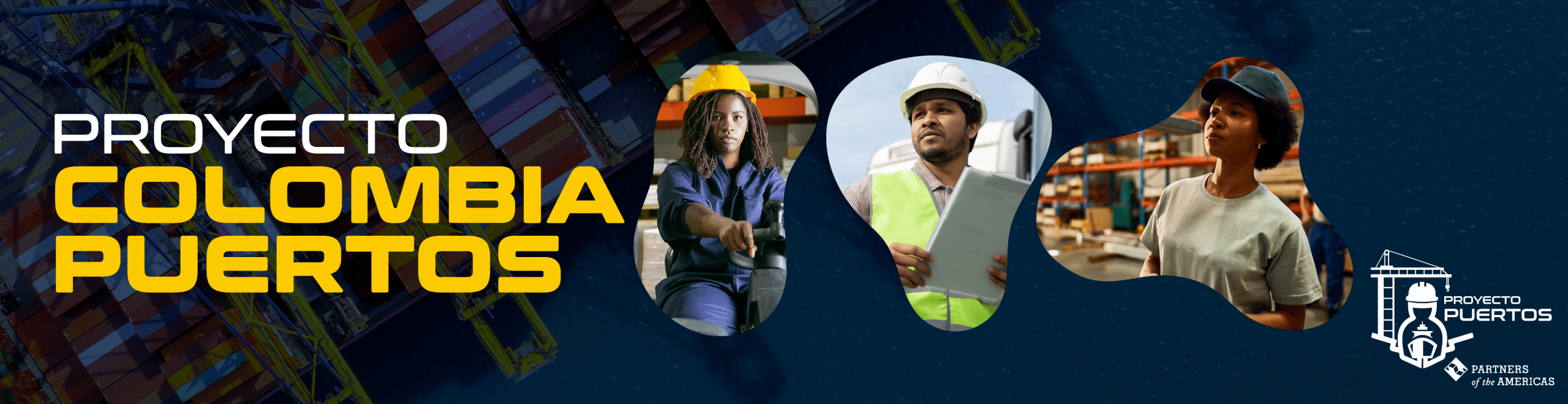
Advancing Labor Compliance in Colombia’s Port Sector (Colombia Ports Project, or CPP), funded by the U.S. Department of Labor’s Office of Trade and Labor Affairs, works to improve Colombia’s compliance with local and international labor rights in the port sector. Focused on eliminating forced labor, child labor, and other labor violations, the project promotes compliance with international labor rights, strengthens workers’ organizations, and fosters social dialogue to address labor challenges in key Colombian ports. The project runs from 2020 to 2025 and focuses on creating sustainable solutions to improve labor conditions and minimize disruptions in critical global supply chains.
CPP strengthens labor law enforcement and ensures fair working conditions in Colombia’s port sector, which is key to maintaining stable trade flows. By improving labor standards, the project helps level the playing field for U.S. businesses and reduces the risk of unfair competition from regions with weaker labor practices. Additionally, stabilizing Colombia’s port sector enhances the efficiency and reliability of trade, benefitting U.S. businesses and supporting stronger economic ties between the U.S. and Colombia.
Funding is provided by the United States Department of Labor under cooperative agreement number IL-35742-20-75-K. 100% of the total costs of the project is financed with federal funds, for a total of U.S. $5,000,000 dollars. This material does not necessarily reflect the views or policies of the United States Department of Labor, nor does mention of trade names, commercial products, or organizations imply endorsement by the United States Government.
350+stakeholders, including workers, government officials, employers, and academics, provided with information and training on organizational capacity, collective and individual labor rights, social dialogue strategies, and labor conditions in the port sector7resources developed, including booklets, interactive tools, and assessments focused on individual and collective labor rights, labor regulations, social dialogue processes, and labor conditions in the port sector5,000+printed and digital materials distributed across Buenaventura, Barranquilla, Cartagena, Santa Marta, and Bogotá, effectively engaging key stakeholders6worker organizations provided with technical assistance to enhance their skills in collective bargaining, governance, communication, and program management -- improving their success in negotiating and advocating for port workers' rightsUSDA Food for Progress Colombia C4D Project

Cacao for Development (C4D) aims to strengthen Colombia’s cacao sector by supporting cacao farmers attain economically viable diversified farming systems, sustainable agricultural landscapes, and equitable commercialization models.
The USDA Food for Progress Colombia – Cacao and Complementary Crops for Development (C4D) project aims to strengthen Colombia’s cacao sector to solidify U.S.-Colombia trade relations. The project represents USDA’s largest investment in Colombian agriculture, highlighting its strategic importance for both countries. The U.S. chocolate market, valued at $28.45 billion in 2025 and projected to reach $36.79 billion by 2030, depends on a stable cacao supply, as the U.S. does not grow cacao domestically. Colombia’s geographical proximity reduces transportation costs and enhances supply chain stability. C4D also strengthens the production of complementary crops for cacao, including plantain and Tabasco peppers, supporting domestic sales and U.S. exports.
Between 2022 and 2024, C4D engaged more than 5,000 producers, generating $14 million in cacao sales and strengthening 72 local producer organizations, improving their market access. To date, C4D has leveraged USDA’s investment to secure $2 million+ in cost-share commitments from local private and public sector partners. By providing training, technical assistance, and financial tools, C4D enhances Colombia’s economic resilience, mitigates migration pressures, and fosters regional stability.
13,703agricultural extension visits performed by the project's 49 extension agents4,500cacao farmers received technical assistance2,100+farmers are benefitting from the project's crop insurance initiativeUSD $116,000in loans deployed by project partners to producer organizations strengthened by the project